Art & Copy is a film documentary created in 2009 by Doug Pray that reveals the thoughts and inspirations of advertising creatives that invented many of the well known ads that we all still remember, despite viewing them years ago. There were many interesting tidbits in the film that analyzed advertising experts, ads such as "Just do it","Got Milk", and "Where's the beef?", but what I found particularly interesting was the segment that talked about Apple's first television advertisement.
All Hail Apple.
Now, I'm not a big fan of Apple products. I have never owned an iPad, iPhone, iPod, Mac, etc. I intend to keep it this way unless prompted by a greater force than my morals to use one. However, I do respect Apple's advertising campaigns, especially the ones with the colored backgrounds, black silhouettes, and white earbuds. It was surprising to learn that Apples first commercial, which was aired during the 1984 Super Bowl, was not informative, but rather pleasantly absurd.
I loved learning through Lee Clow, the man who co-created the ad, that Steve Wozniak and Steve Jobs both paid for it out of pocket. Honestly, the ad worked pretty well on me. I feel like if I had watch this ad during the 1984 Super Bowl I would have been immediately interested, and would have begun researching what the hell a "Mac" was. It's also pretty cool that the commercial also sparked a renaissance-like change when it came to filming and editing future commercials for several companies. I had never seen the ad before watching this documentary, but I have seen something similar in the past when the video game company Valve ported their popular game Half Life 2 to the Mac OS.
So yeah, it was pretty neat to put two and two together nearly six years later. As I stated before, I don't like Apple products, but the advertising division of the company definitely knew how to put their product out there. I'm a little curious as to what kinds of ads will be memorable in the near future, especially with so many of them being constantly thrown at us day in and day out.
It's been a tough couple of weeks with college and working this semester, but I have taken some time to begin practice on animating in Source Filmmaker. I've been learning about the different models, particle effects, lighting, and time manipulation during free time between my busy schedule. For an assignment last year in Dr. William's animation class, I opted to use Source Filmmaker to create my animation, and this was the end result after a few hours of experimenting.
It was short, it was simple, and I used a few techniques in posing and lighting that I was happy to figure out and implement. However, for my capstone project, I wish to create something 10x greater than that assignment I roughly put together. I've already got a rough story idea in my head that involves elements inspired by films such as 10 Cloverfield Laneand Ex Machina. I don't want to spoil too much, but I have a feeling this will be fun to animated, especially when it comes to character facial expressions. I'm still reading through the books recommended to me by my advisor in my last post, so the story could still drastically change. I've began study on pose-to-pose animation in Source, and I've been following tutorial videos like the one linked below to better understand the technique for my end product.
Alongside animation practice, I've been reading scholarly articles on the overall subject of 3D animation. Pat Power's Animated Expressions: Expressive Style in 3D Computer Graphic Narrative Animation contains a lot of interesting viewpoints about the visual styles and semiotics of animated shorts. It also goes in-depth on subjects such as projects with a mix of live-action and CGI, which was an interesting read, but I mostly stuck to the research on animated shorts. I hope that my animation manages to bring emotions out of my audience, rather than thoughts like "this looks pretty meh" or "I think I saw a glitch in the background". The story and characters are my main focus in this short, and I'm going to polish the overall animation so that the audience only pays attention to said story and characters. This is going to be a project I will be putting quite a bit of effort in within the next couple months.
This election cycle so far has been a wild roller-coaster that I've wanted to get off of about 6 months ago. Each day one (or both) of the presidential candidates says something outrageous, then it's blown up on most major news networks for about 24 hours, then swept under the rug to make room for tomorrow's scandal. I know, this is how it's been for years in our society, but it feels a little different this election, doesn't it? Many people, including myself, believe it is thanks to the internet's archives of poor decisions made by both candidates over the past few decades, and every day more and more stuff is archived, which can either benefit both candidates, or severely hurt them. Usually, thanks to selective bias, it's the latter. I've only been following this election since last November, but I have kept up with it almost everyday since. After my chosen nominee was pushed out over the summer in favor of someone I trust less than a gas-station egg salad sandwich, following this election became less about caring about the future of this country, and more about entertainment. However, putting my utter discontent of both presidential nominees aside, I do respect both nominee's effective use of fear-mongering, blaming others, and telling voters just what they want to hear to gain their support. It's not a system that appeals to me, but it seems to work for the uninformed common masses of this country. In this blog I will discuss my understanding of the semiotics of the current election cycle, and how the presidential nominees got to the positions they are at now.
Donald Trump, potential billionaire, has a long history of being a TV personality, real estate entrepreneur, businessperson, steak salesman (my favorite), and many other professions before becoming a nominee for one of the most powerful people of the world. One outside of the loop may ask: how did this guy become a presidential nominee? Simple! He speaks at a 6th grade level, something almost all eligible voters can relate to, and he speaks his mind. He attacks anyone who makes fun of him, no matter how small the comment, and his followers seem to love it. "A man unafraid to speak the truth" one may say, appealing to many, but mostly those with not-so-politically-correct-views. Hostility, aggression, "weaponized stupid" is what seems to keep Trump's support alive nationwide. He's psuedo-popular among many ineligible voters (most under 18, or outside of the country) for being a vessel for memes across the internet, calling him the "God Emperor", a title given to a fictional faction leader of the table-top game Warhammer: 40k, but hey, there's no such thing as bad press! His constant presence on Twitter also keeps him relevant, which brings me to a major point:Trump's understanding of the internet. Trump seems to adore being in the limelight. He understands that the internet is the place to go to gain support, despite the negative content it generates against him daily. He has a far better handle on this type of communication than his opponent, Hillary Clinton, who appears to ignore or misuse the internet's great potential, but more on that later. What's pretty impressive about this candidate is how he's managed to gain so much support while only spending half of Clinton's Campaign Funding, a decent portion of it self-funded.
As far as I can tell, these seem to be the major factors that appeal to Trump supporters, and I didn't even delve that far into his policies, which don't seem to be that big issue of an issue for both candidates this election cycle.
Clinton needs millennials, badly. She's got a lot of support from name-recognition, SuperPACS, and being the first potential female president, but that's not enough. She managed to write a majority of them off during the Sanders Movement, believing they wouldn't impact the election much. However, the opposite is the case, and it's led to Trump catching up to her pretty quickly. Millennial's aren't the Clinton Campaigns only problem, there's Benghazi, refusal to release transcripts to paid wall street speeches, the whole email and FBI thing, the Wikileaks thing that made Debbie Wasserman Schultz step down as DNC chair only to be appointed an honorary chairwoman for Clinton's campaign a few hours later, the recent IT guy incident, and many more that seem to be ignored by major media networks, mostly CNN for some reason. (Hint: CNN's parent company is Time Warner) If we pretended that none of that ever happened, what we are left with is an unlikable person who just can't seem to hold on to people's trust. Her platform seems to be "I'm Not Trump" rather than actually talking about her policies. She may be a decent choice for baby boomers due to the remembrance of the nostalgic era of her husband's presidential terms, but to Millennials who are constantly update by the internet (including myself), she's not very favorable. Her recent health issues and compulsive lying are what's currently bringing her down in the polls, but hey, at least her Millennial pandering is getting better.
In conclusion, the internet is key to understanding the semiotics of this election. Not biased websites connected to television news networks like Fox and CNN for republicans and democrats respectively, nor liberal sites like Democracy Now, but a conglomeration of fact-checking sites like Politifact. Sites that due extensive research rather than playing on one's emotions for ratings. From what I understand, our culture is really into bias confirmation due to the multiple sources of news that specifically pander to those with certain views rather than giving a non-bias article for all. The fault can be traced to the politicians that can't seem to keep money out of politics, fueling the divide between parties, and also giving us possibly the two worst candidates in American history. 2016 will most definitely go down as one of the worst political years in recent times.
Last week I decided to change direction on my capstone and beginning working on an animated short using the open source animation software: Source Filmmaker. This software is used by the video game company The Vavle Corporation to create animated shorts for their video games using their game engine as a base. I've been fascinated with 3D animation as long as I could remember, and I thought that creating a project within the software for my capstone would be a great first step to finding a career in animation. However, I know that before starting any of the actual animating, the writing of the short must first be completed to get a good idea as to where the direction of the animation is heading.
Screenshot of Source Filmmaker
My Capstone adviser recommended to me to books to read before I even think about opening up the software to begin working. The first being Ideas for the Animated Short: Finding and Building Stories, which focuses really well on the writing for 2-5 minute shorts, as well as acting and dialogue. The second book is Gardner's Guide to Animation Scriptwriting: The Writer's Road Map, which delves into script-writing with illustrated text and detailed instructions. I have ordered both books last week and eagerly await for their arrival to begin studying. Along side the books, I have found multiple scholarly articles on animation that provide valuable information on animation, albeit some of it a bit dated. I've already began thinking about what kind of story I want to tell with my animation, and I feel like with enough dedication (and tutorials) I can pull off a decent end product by the end of next semester. To demonstrate what people can do with Source Filmmaker, I have provided a video from Youtube below of one of my favorite animations created by an ordinary guy for fun using the software.
For my first project I know that I won't be able to create something this amazing, but it's the kind of video that I like to strive for one day. For my next entry in this blog, I will discuss putting what I learn from the books I ordered to practice on a script for my animation.
I began the base of my capstone project with an idea about something I despise about the video game industry, and I hope I can shape the idea into a project that will inform others about the dangers of pre-ordering games, and purchasing downloadable content. For those unfamiliar with the term pre-ordering, it is to order an item before it is commercially available, meaning to purchase before it is reviewed by others or available to rent. Some may justify this kind of purchase to make sure that they get a copy the day the game is released, but experiencing the game itself may turn out to be unworthy of the money spent to acquire said game. Allow me explain.
An ad to entice people to buy the new Call of Duty. Take a look at the price on the top right. Crazy.
Above is an ad for pre-ordering a new Call of Duty video game set to release this fall. This ad was launched months ago, slowly gaining pre-orders before the game's release with a *slightly* discounted bundle price that comes with extra in-game content. According to the scholarly article by Xuying Zhao and Kathryn E. Stecke called Pre-orders for New To-be-released Products ConsideringConsumer Loss Aversion, this strategy is called Moderate Advance Selling (MAS) and the article goes into deep details on how businesses use it to maximize profits on their product that I'm deducing and applying to the gaming industry. By the way (fun fact), the additional content (DLC) that people pay in advance for usually HASN'T BEEN CREATED YET. That content (which for Call of Duty would be new multiplayer maps), will be worked on and released over the course of the next two years, at least. This is a standard business practice in the gaming industry, and it only has gotten worse as the years go by.
Let me share a personal story about a pre-ordering mistake I made that sparked my dislike of the practice back in 2011. Above is a picture of the game Brink, which was released in 2011. The game looked incredibly interesting to me back in the day, so I saved up money from my part-time job at a fast-food joint to pre-order it (my first pre-order ever). I pre-ordered, I received the game, and to my surprise, I did not enjoy the game. Apparently I wasn't the only one, because others online, including reviewers, were not impressed by the game either, despite the hype. That day I made a promise to myself to not purchase a game before release until I hear a general consensus that it is worth checking out, or if it's heavily discounted. This same event has happened to other people for multiple games the past couple years, and as I said before, I wish to create an informative project that breaks down how the gaming industry's consumers are suffering from this business choice.
Created back in 2004, Frontline's The Persuadersis a documentary about advertising in America that holds a lot of information that is still relevant today. The host of the program, Douglas Rushkoff, takes viewers into the "persuasion industry", a world of marketing and public relations that is constantly fighting for the attention of average consumers. Rushkoff believes that with the growth of new technology, advertising grows alongside it, becoming more and more of a part of our everyday lives. This documentary opened my eyes to marketing strategies that have I've seen occur in my lifetime, but never really put much thought into how much they influenced my purchasing decisions.
The image above is from an old ad by Coca-Cola that was meticulously tailored to give you the thought "Man, I could really go for a coke." It has everything in it, a pretty woman, summer attire that implies it's a hot day, the coke bottle, the coke logo, and a simple "Yes" in the top right corner that works in many levels on accepting a coke into your life. Ads like these have grown stronger in the couple decades, making their way from posters and newspapers, to animated billboards and ads in our mobile games. Ads are also found in our big blockbuster movies, with main characters drinking a coke, or a giant monster throwing a coke supply truck at our favorite super hero. They've successfully infiltrated and heavily populated our day-to-day encounters. As I mentioned before, The persuaders is a few years over a decade old, but not much has changed, in fact, things in the persuasion industry have rapidly evolved.
Emotions and recognizable, familiar logos are a big part of advertising that seemed to be a timeless success. This was heavily hit on during the documentary, and for good reason. It just works! Looking at this McDonald's ad may give many of us a sense of hunger, a memory of eating their with family, or the catchy jingle that Justin Timberlake was paid millions of dollars to sing. Yeah, I'm not kidding. Anyways, ads are overwhelmingly present these days, and The Persuaders does an excellent job at doing an in-depth analyses on how ad companies help products rise above the rest, and how some products fail due to poor marketing. The documentary used the Song air service ad campaign to show us how things can go wrong during an ad campaign. This air service was too vague with it's product and too artsy with their ads to grab a consumer base to keep the company afloat. I never even heard of Song before watching this film! Shows are little they made an impact in the market.
The documentary taught me a lot about the "persuasion industry", as well as made me more aware of the ads that are thrown at me everyday online. From now on, I'm going to start dissecting ads to see what they're trying to go for (in my own interpretation of course) and see if the ad successfully made me interested in the product. I wonder if networked brain augmentations ever get created, would companies start sending ads straight to our dreams? I think there was a Futurama episode about that...
It's the beginning of my last year in college as a communication major, and that means that it's time I start prepping for my capstone project for the spring semester. When I switched to this major last semester, I didn't know what direction I was going to take that would ultimately influence my capstone project. As of now, I'm still not 100% certain on what I'd like to create for my project, but I'm leaning a lot towards something in the realms of the video game industry.
I have multiple ideas in my head including a project on esports, pre-orders and dlc, card and board games, or animated shorts. None of these are set in stone, but I'm really leaning on doing something on the coverage of esports, the rise of "let's plays", or creating an animated short with a unique story using assets and models from movie-making tools created by game developers. All I truly know is that I wish to create or research something that goes along the lines of my hobby that I've put time in since I found my Uncle's old SNES back when I was 9 years old.
Video games are growing more and more popular everyday, especially with the inclusion of easy to develop mobile games that are flooding (and will eventually crash) the mobile market. I will work with my capstone director as much as I can until I have a definite project that I would be satisfied and proud to call my capstone near graduation.
I like to think of my generation (Generation Y) as the "oversharing" generation. We like to post EVERYTHING we do online to our peers and family. On social media, we post pictures of our dogs, of what we eat, short videos of hanging with our friends or vacation trips, opinionated self posts, selfies, articles we relate to, funny pictures from other sites, etc. We don't think twice of how long that stuff stays on the internet, nor who has seen it or who has saved it to use it against us at some point in the future. Aside from paying for an overpriced internet provider, our access to the internet as a whole, is free. However, with privacy being so minimal across social media sites and other sites we visit, can we really consider the internet free? In Episode 3 of The Virtual Revolution, Aleks Krotoski poses the thesis that there is a "cost of free", where the Internet has redefined privacy, personal space, and who we are. On this episodes topic, I completely agree with Kortoski.
Everyone search dozens of things a day on online search engines, whether it be a phrase, a product, a definition, or an image that made us laugh last week. As the episode explained, a majority of users don't know (or don't care) that these search engines gather the stuff we look up, and strategically come up with ads for products and services that relate to our web searches. This can be seen as a "cost" for using the internet, because it conveniently places products we may have wanted on the side of our web searches, effectively interesting us in purchasing said product on the same day, or some day soon. Google is the biggest contender to this type of marketing method, earning money from small or big business to get their products on search engine ads everyday. With it's acquisition of YouTube, Google is becoming a global force on personalized advertising, and that could become a big problem for the privacy of users someday.
Alongside unwanted personal advertising, the internet archives our searches, which can be tracked by our internet providers to find out more about us in either an investigation or beginnings of an investigation. It could be useful against terrorist and drug busts, but it could also be bad for people who have personal reasons to search unusual things. Our searching methods may not be too closely monitored right now, but if stricter internet laws are passed in the future, this could lead to having more and more of our information and data in the hands of the government, who would not hesitate to use it against us. We need to be careful about what we post on the internet guys, it can lead to so many negative things (blackmail, bullying, lose of job, etc). Hopefully things start looking up soon, but until then, be cautious, and thanks for reading!
In November of last year, I began to pay attention to American politics a lot more than ever before. I heard about our chosen presidential candidates for both parties and how the rest of the world was calling our current election cycle a "circus." I looked into the platforms of Trump, Bernie, Hillary, and chose the one I wish to be President accordingly. However, through my research I realized something incredible about the internet and how it affected politics. It dawned on me that the internet is an archive of each of these candidates lives, and contained all of their poor political choices only a google search away. In Episode 2 of The Virtual Revolution, Aleks Krotoski discusses how the internet can connect and divide humanity in a political context, and I completely agree with her.
As I previously stated, the world of American politics is new to me. However, thanks to Reddit, I've caught up to stories that revolve around our presidential candidates. The internet has benefited both Trump and Bernie, whether it be through internet memes, or articles that explain their platforms. Unfortunately for Hillary, the internet is not too kind to her. Having such a long and sketchy history in politics, the internet has managed to dig up reports, articles, and video evidence of Hillary flip-flopping on issues every other month. While Bernie and Trump have a decent understanding on how social media works, Hillary seems to believe that it's not as effective as everyone is led to believe. But it is.
The entire political narrative has begun to shift because of scandals being spread across the internet to uninformed voters. This has led Hillary from pandering to her followers and banking on name recognition for presidency to not holding press conferences and using scripted interviews as damage control. As Krotoski's video showed, multiple governments and government officials have been exposed thanks to whistle-blowers and citizens using twitter to spread information about the injustices that are occurring in their country. This kind of thing happens on a daily basis, and I think it's building up to something big in the near future. Events like the Panama Papers and Clinton's email hack will eventually lead to a political revolution in our county. The reason one hasn't happened yet is because there are still millions in America who are uniformed and collectively unorganized. In the near future we will see an uprising from American citizens, but as of now, we're too busy with the latest Game of Thrones episodes and celebrity gossip. We'll get there....eventually....when it's convenient.
A lot of us, especially those in my generation, take the internet for granted. We use it for mindless entertainment like pictures of grumpy cats or outrageous prank videos, and we never really think about how it was started or how lucky we are that its creator (Tim Berners-Lee) decided to make it free rather than monetize it. In her video, HISTORY OF THE INTERNET - THE VIRTUAL REVOLUTION - EP. 1, Aleks Krotoski explains to viewers how the internet was the gateway to "The Great Leveling" of humanity. In short, the internet essentially puts everyone on the same level of things despite wealth, nationality, etc. I agree with Krotoski's findings, and I think this concept hasn't changed too much in today's version of the internet.
In my free time I like to browse the website Reddit. To those who are unfamiliar to the site, it's essentially a online newspaper you can customize to show you sub-sections from world news to pictures of birds with human arms photo-shopped on them. I'm not kidding. Anyways, on the internet, everyone is mostly on the same level. I say mostly because I think some people have more power than others through reputation or paid-services. However, those with power are greatly outnumbered by the general masses. These general masses (us, the people) have a lot of power on the internet. As an online lurker, I've seen incredible things happen quickly, like the fall of a company within 24 hours because of internet users like us spreading news across the world. We also have websites like 4chan (which I will not link, go visit it on your own time) that can coordinate attack against websites and big companies to steal information that the people need to know about. Today, I think the internet has evolved into something that can become potentially dangerous to "the establishment" as more and more people begin to understand its inner mechanisms. As much as I love the internet as it is now, I have a feeling that sometime in the next couple of years, the governments of the world will begin to see it as a a threat and attempt to strictly regulate it. I mean, look at our presidential candidate Hillary Clinton, who had her private email account hacked and could potentially be indicted because of it. The internet has evolved into a powerful anti-establishment tool, far greater than it has ever been since its creation. We know what's going around all across the world, we can catch politicians in their lies by simply googling a video or speech they had given a few months prior, and we can make significantly beneficial changes towards movements via re-tweeting and donating. We're living at the peak of the wild west years of the internet guys, enjoy it while it lasts.
When I first started this class I was transitioning from
a teaching candidate in the education field to a major that I truly had a
passion in. I was always interested in studios, radio stations, animation,
movies, and graphic novels, and I always wanted to turn my interests and fascinations
on these subjects into a career. In a later point in life, when I’m financially
settled and ready to hunt for the perfect job, my choice would be working
behind the scenes in television or film. COMM 360 gave me a chance to study the
works of cameras, lighting, and audio all in one classroom. I was so excited by
the opportunity, I stayed a couple hours after class to familiarize myself with
the equipment on my own time. For my overall attendance, I know that I only
missed one or two classes for more pressing issues with family and medical
situations, but every day that I was there I took in as much as I could from
the offered positions in the projects, fixing and tweaking equipment for
shoots, and just learning as much as I can. As for participation, I tried to my
hand on as many different jobs in the studio as I could, but I never built up
the courage to attempt and be a director during a shoot. I’m not a born leader,
I emerge as one when no one offers to do it, but I would not volunteer when
others are better at it. I like being the behind-the-scenes guy, like a Grip in
the industry. I’ll take action and responsibility on whatever placement is
giving to me by a director, and I would do it to the best of my ability. I
asked Professor Williams as many questions as I could to better understand the
sound system, as well as camera set up. I also asked questions to Torin, a
friend of mine who was also part of the class, and had a decent amount of
background knowledge of the study. I practiced outside of class when I could,
and used the key given to me by Professor Williams to come in on my time and
experiment with the equipment with Torin. I learned plenty from this classroom
that I could demonstrate by knowing my role and showing other students in the
class on how to properly set cameras, use the sound board, and anything else
that I had to time to learn about. As an outside project in class, I helped
with the Inauguration presentations on April 7th on my own time to
understand how all the things I learned were put to use in the real world. With my time put in inside and out of class, I think an "A" for the course would suffice, I did my best to learn and experience as much as I could to better prepare myself in a career I'm excited to be a part of.
My first blog correlated to Communications 345 was about myself and the things that I liked about animation. Today, I'm wrapping up my blogs for said class with a post about what I think is the most important phenomenon of animation. It took me awhile to think about a certain topic within animation that I would like to talk about, and just last Saturday, I came across a game that helped me choose the topic. Gearbox Software , the game company behind the Borderlands game series, recently started an open beta to allow gamers to test out their new game Battleborn.
This game has not been under my radar since I first heard of it a few E3's ago. I knew of it's existence, but never saw any gameplay or what the playable characters looked like. After participating in the beta over the weekend, it has quickly become one of my favorite games of recent time. The gameplay is fantastic, the aesthetics are great, and the voice acting and humor are pretty top notch. Although, I think the best part of the game is it's character design.
Just look at those characters! They are all so distinguishable from one another! All unique, and all with their own funny personalities in-game. I think the thing that makes me want to watch an animated movies, play a game, or anything else that can be labeled under the animation field is the way they design their characters. I'm a fan of realistic animation, but the wackier the design, the better. To the left is the character Montana. His exaggerated muscle mass compared to his normal sized head is absolutely hilarious to me. You can tell a lot about his character just by looking at him! To the right is the character Orendi. What can you tell from the character? You probably think she's evil right? Maybe with a maniacal personality? If so, you're right. In-game she's batsh*t crazy. Anyways, I think character design is key to animation. It's what draws in a lot of people to an animation project, including myself. I can honestly say that my favorite animated movies are my favorites because of character design.
In Part Two of Detheaux - Communication and the Anti-Disney Aeshestic, written by Jean Detheaux from Animation World Magazine, Detheaux expresses his saltiness of the United States taking beautiful works of art made in foreign countries and turning them into bland shells of what they were previously created for.
"Why is it that, so often, Hollywood and the "North American popular culture" take something that has depth
and complexity, and almost invariably, transform it into something that is so very bland, so full of clichés, based
on recipes, so predictable, so tasteless (in all the meanings of that term)?
Disney reigns supreme amongst those guilty of borrowing (stealing?) civilization-forming myths, and turning
them into entertainment, in effect "de-mythicizing" them, rendering them "harmless" and depriving them of their
deep significance and impact, nullifying their formative mission."
Rembrandt, 1600s Dutch Painter
Using works of art by Rembrandt as an example, Detheaux uses parallels between paintings and animation to discuss how America is essentially ruining the media with cookie-cutter animations used for entertainment rather than cultural expression. One of Detheaux's biggests complaints in the "invasion" of one dimensional, and linear, story tellers that are extremely simplistic. Rather than appreciating the magic of the form, a story is tacked on to keep audiences interested in a coming of age story, or a story of good versus evil. According to the author, Disney is the biggest culprit in doing these acts, and I kind of have to agree with him. Kind of.
Personally, I believe that Disney USED to be that kind of company, that prioritized story with simplistic plots in the animation. However, in recent years, Disney has produced some very clever movies with great meanings behind their storytelling and beautiful animation. Jumping from 2D to 3D, this year, Zootopia by Disney was released. This movie had the best of both worlds. Amazing animation, and a intricate story that was above Disney's standards. So I do agree with Detheaux with his commentary on early Disney projects, but today, Disney is way better at creating combinations of story and art. I for one welcome our new Disney overlords.
In Part One of Detheaux - Communication and the Anti-Disney Aeshestic, written by Jean Detheaux from Animation World Magazine discusses the interpretation of "realism" within non-disney animation studios used to animate their projects.
Disney animators look for inspiration from real world anatomy, props, and locations before adding rubber hose effects and stylization to their animations. Other animation studios follow similar steps, but not in the same formula as Disney to make themselves distinguishable from the big corporation.
“There seem to be two major options here: either one believes "the real" is a known, quantifiable and finite entity
and it then is common to render it according to societal models ("photo-realism"), or, as is more often the case
with "artists," to "improve upon its assumed-to-be-known appearance by manufacturing a style." ("What can I do
with/to that?" which inevitably leads to "manufactured styles.")”
With these two options to start a base one, artists and animators outside of Disney try to set their own style of animation, just like the creators of Heavy Metal. The studio of this movie opted in to make the film's characters more closely resembling actual humans, and all the mythical creatures being more detailed than most of the creatures seen in Disney films.
I believe that the way that studios decide to take inspiration from the real world, whether is be photo-realism or simplifying beings and environments, it's a defining choice that would make audiences remember the film or show, and will more likely remember the studio that created it wasn't Disney.
A good story is what makes an animation really come to life. Where would disney films be if their stories weren't on par with their beautiful? I've seen some beautifully animated short film projects before, but a lot of them lacked in story depth to really have them stand out. In the animation business, when a studio comes up with a plot that they think is good enough for their movie, they move on to sequences. In the book The Illusion of life: Disney Animation by Ollie Johnston and Frank Thomas (1981), they address how a sequence serves in animated films:
Our feature films always seemed to end up with about 14 sequences. No matter how each started out, whether with high adventure or complicated stories, by the time we developed and balanced and streamlined and edited we ended with little more than a dozen. At least two sequences would have been cut out after we started production, and something else would have grown to sequence length and been inserted even later….The fact becomes quite important when a picture requiring many incidents in different locales is being considered. (pp. 368)
When it comes to writing a story for an animation, studios have to be certain that they don't bombard the audience with action that lacked any narrative. Without narrative, an animation would not be anywhere near as interesting if not done correctly. There are some movies, like Disney/Pixar's WALL-E that spends a good portion of the movie using character movement to show emotion rather than using any words. Character development is a major player in producing a good animation.
To avoid making animations too exciting or too dull, guidelines were created:
1.Avoid scenes or activities that are only continuity. If there is a mood to be established or scenic atmosphere is needed, then the continuity can be secondary to the pictorial effect.
2.Avoid expository scenes. If the scene’s purpose is to get a character to talk or explain the plot, avoid it. Instead use a narrator or title to do it.
3.Make sure the story incident or situation is really interesting. This could be easily achieved by the actors simply letting their personality and decisions form the backbone of narrative, but make sure the situation is strong enough to invite audience investment.
4.Be sure the characters have an opportunity to come to life, find the entertainment in the situation and character.
5.Look for places to show the characters thinking. Show them changing attitude, and look for ways to show more facets of their personalities; they should grow through the film.
6.Ask yourself, “Can the story be done in caricature?” In which can the story be believable, but not realistic?
7.Tell your story through the broad cartoon characters rather than the “straight” ones, i.e., the side characters.
By following these guidelines, Disney produces multiple movies that contain very well done stories, the most latest being the movie Zootopia.
We're all familiar with the comical representation of dysfunctional families in media. We've got sitcoms like Arrested Development and Modern family, as well as animated comedies like The Simpsons and American Dad. It's not too often that television sheds a realistic light on these types of families, but that's where autobiographical graphic novels come in to fill in the gaps. Stitches: A Memoir by David Small, and Fun Home: A Family Tragicomic by Alison Bechdel are two graphic novels about each author's youth within their respected dysfunctional families. Although both novels are very different from one another, they do occasionally have parallel themes that relate to growing up with distant parents.
Warning: The next section of this blog contains spoilers for both books, if you want to give them a read, stop here. Again, you've been warned.
Abigail's story revolves around the death of her father, and discovering the family secret that he was actually a homosexual. Unbeknownst to her parents for awhile, Abigail became interested in the same sex in college, but I'm getting ahead of myself. Abigail spends most the novel explaining her relationship with her father beginning from her childhood up until early adulthood. She and her brothers spent a lot of their time helping their parents fix up their Victorian house to its former glory, helping at the family owned funeral home (they called it the Fun Home), and occasionally going on family vacations with their parents who seemed to care more about their books and theater auditions. The thing that I loved the most about Bechdel's novel was probably the way she revealed her father's interest in young men early and abruptly in the novel. One moment the plot seemed to be linear and flowing well, not quite predictable, but you could catch the early vibes about the novel being about a dysfunctional family. Then BAM, out of nowhere, she not-so-subtlety drops the bombshell that was the father's sexuality. It was so sudden, I had to read the section three times just to make sure that I was reading it right before moving on. Here is the panel in question:
It's much different than the way David Small handled his family's "secret" towards readers, which I will get to here in a second. Bechdel's narration in the book was much more articulated than most graphic novels that I was used to reading. She made several references to books, plays, and movies that I never even heard of. Honestly, it made me feel less intelligent, HOWEVER, anytime I did catch a reference, my confidence got a little boost. The writing style and reveal are quite different than Small's Stitches.
David's story is mainly centered on the relationship between him and his mother. There are occasional encounters with his father and grandma, but it was his mother that was the center of what made his family dysfunctional. David's mother seemed to have a mental disorder that may had been genetically passed from her mother, or brought upon her by the abuse she received from her unstable mother. Unlike Bechdel's book, the writing style was a bit more simple and the secret was slowly revealed subtly rather than surprisingly thrown at the reader. It was fun to slowly put the pieces together as the story went on, and I absolutely loved the dream sequence at the end of the book. In the end, David's grandma burns a house and the mother dies (this is a super rough summary, a lot more goes on) then David has a dream. In the dream he is in a house by himself, and out a window he sees another building nearby with his grandmother inside and his mother sweeping the path from his house to the building. His dream is essentially a metaphor of his mother paving the way to a mental disorder, but Daivid refuses to follow their footsteps.
In the end, both novels shared stories of their dysfunctional families with major differences, but a few similarities. They both share riveting tales about their childhoods, as well as their troubles with both parents, but with more focus on just one of them. They overcame the issues that their parents had set inadvertently, and both went on to live their regular lives. Art wise, Bechdel's style resonated better with me, but that's because I like sharp drawings rather than watercolor, but Small's simple writing style and parallels to Alice in Wonderland were a bit more intriguing to me. Overall, bother novels are absolutely fantastic reads that I would definitely recommend to friends, family, and colleagues!
“We seem to know when to ‘tap the heart.’ Others have hit the intellect. We can hit them in an emotional way. Those who appeal to the intellect only appeal to a very limited group. The real thing behind this is: we are in the motion picture business, only we are drawing them instead of photographing them.” - Walt Disney
Appeal compliments the Mood of animation, which was previously discussed in Chapter 5. Body movement has a huge part in having a character be relatable to the audience, as well as keeping the suspension of disbelief strong in movies and television. You can't have one without the other, or audiences will become disinterested in what they are watching because they may not think the characters are all that interesting. Take the movie "Inside Out" for example. The main characters are all emotions! Each one is relatable in their own way to what human emotion they represent. EVERY human has emotions! So when the character Anger gets, well angry, we can relate, because we've all been angry! We've all been happy, sad, disgusted, scared, and angry, and the appeal of these characters come from the body language and facial expressions they express when they portray their corresponding emotion.
Characters from Inside Out
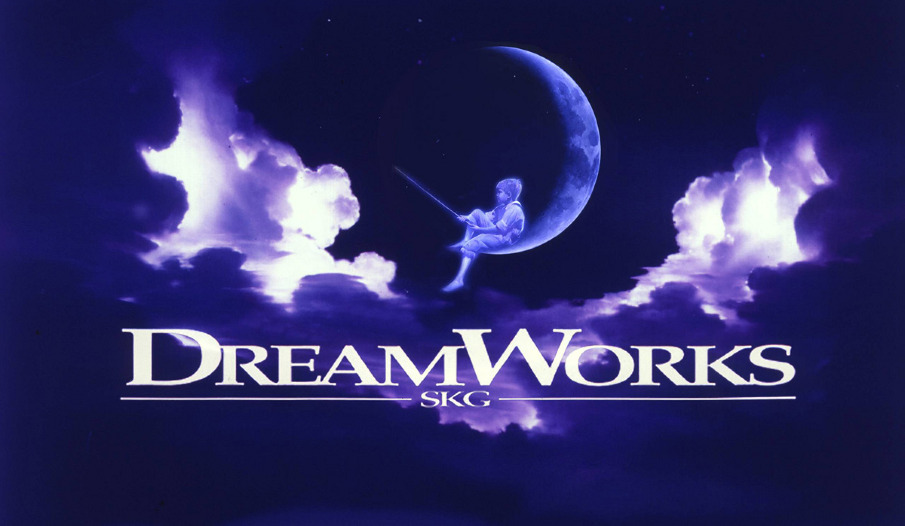
The Dreamworks Logo before every of their movies
I don't believe that Disney is the only one that brings this sort of "magic" to the table. Dreamworks films are very appealing due to their relatable characters in movies like "How to Train Your Dragon" and "Kung Fu Panda" Even though they take place in fantasy lands, the main characters are have very human like qualities (I mean, Hiccup is human, but most other Dreamworks movies are usually animals or magical creatures) who every audience member can relate to in their own way. People come to watch Dreamworks movies because of how cute and magical the movies can be, despite not being made by Disney, the art style and movements of characters keep audiences coming for more as Dreamworks makes a new film every couple of years. Disney hasn't cornered the market yet, but with their acquisitions of Marvel and Star Wars, they're getting super close. It's almost a little scary.
1. Appeal in Drawing: Focusing on the audience and how they feel toward a specific character. - Giving a character a unique attribute, like the Incredible family and their red suits with their signature "i" in the middle of their suits.
2. Staging: Focusing on main parts of the scene for the viewers. - The current motion of a character, or facial expressions as well
3. Most interesting way? What can you do to make each and every character interesting to all types of audiences? - A character that is playful, yet sometimes serious is easy to relate
4. Is it the most entertaining way? Making sure that the character is intriguing. - Make them funny, or super sarcastic! In the Incredibles, everybody had super powers! Pretty intriguing.
5. Are you in character? When creating that character, get into character yourself. Try to relate to the character. - Mr. Incredible is probably the most relatable character to middle aged dads, which are probably the ones who created him.
6. Are you advancing the character? Make sure the characters are advancing in time just like people do in real life.
- Mr. Incredible does advance throughout the story, from frustrated cubicle worker to back to a super hero with his family
7. Is this the simplest statement of the main idea of the scene? Do not overdo your work. Simple can be more in some cases. - Each scene is important in The Incredibles, from introducing characters, to advancing the plot without giving too much detail.
8. Is the story point clear? Keep the story simple so it is easy for the audience to follow. - Super heroes need to defeat bad guys, pretty simple.
9. Are the secondary actions working with the main action? Making the characters as realistic as possible. - In some scenes, the family acts like a normal family, making them more relatable despite being super heroes.
10. Is the presentation best for the medium? Always remember to make sure that the animation will successfully present in any medium.
- The aesthetics of the movie fits very well with the medium. 11. Does it have 2-Dimensional clarity? When viewing on a flat surface, make sure the characters are visually simplistic.
- All the Incredibles can be seen pretty clearly
12. Does it have 3-Dimensional solidity? To be sure that it can also be in 3D form as well as 2D. - Yup, its done pretty well
13. Does it have 4-Dimensional Drawing? Making sure that when these things come together that they still look acceptable.
- The movie does this perfectly
14. Are you trying to do something that should not be attempted? Do not do things to the characters that may take away from what they have to offer. - No character in the movie goes away from what is expected form their character Additional 12 Points of Animation:
1. Inner feelings and emotion: Give each character a personality! 2. Acting with clear and definite action: Get to the point and keep it clear. 3. Character and personality: This draws the audience to the characters. 4. Thought process through expression changes: This makes good animation along with creating reality. 5. Ability to analyze: Be sure to proof your animation. 6. Clear staging: Keep in mind how it will look on screen and go from there. 7. Good composition: How does the scene look as a whole? 8. Timing: Deals a lot with the frames per second 9. Solidity in drawing: Good drawing+good animation=solid work 10. Power in drawing: This adds drama to the story. 11. Strength in movement: Gives characters powerful traits 12. Imagination: Imagination is what creates animation! 9 Ways Animation Builds Emotion in the Imagination of the Audience 1. Rear View 2. Shadows 3. Shadows over the characters 4. Overlays 5. Dramatic Layout 6. Pictorial Shot 7. Effects Animation 8. Held Drawing with Camera Moves 9. Offstage Sounds